

Prev post
Insight: When RCA Misses the Apex – And How Brake Dust Told the Truth
One of my clients—sharp operator, good team, decent systems—was struggling to understand why their incident reviews kept circling the same problems.

Sometimes the fix is so invisible, it’s hard to believe how close you came to disaster.
It’s Tuesday. I’ve had two clients already engage the Fixer Extreme Test this week. Now I’m back in my hotel room, and I’ve just applied it to myself. That’s when I knew—it’s worth writing an Insight article.
This isn’t textbook thinking. It’s instinct, forced imagination, and cut-to-the-chase metaphor-based articulation of real-world problems and solutions. It’s how I operate.
Earlier today, I was about to tweak my Microsoft Edge settings to make opening a Visio file easier. Nothing major—just a convenience click. But something screamed in my gut: Don’t do it, Jason.
I didn’t know why. I couldn’t explain the technical risk. But I remembered the ice on the speedometer probe that brought down a Russian passenger jet. A tiny oversight. Catastrophic outcome.
So I ran it through the Fixer Extreme Test:
Exaggerate it. Imagine the worst.
What if I needed to open something in Edge four months from now—something critical—and that tweak blocked me? What if I was trying to submit a $75,000 proposal and couldn’t access the portal? What if that one click cost me the job?
I flicked the switch from glass-half-full to glass-empty. And I didn’t touch the setting.
That’s the Fixer mindset. It’s not paranoia. It’s structured foresight. It’s knowing that in high-stakes manufacturing, production, or services like consulting, the jet crash doesn’t come from the obvious. It comes from the tweak you made months ago that seemed harmless at the time.
Gut instinct is a system. The Fixer Extreme Test gives it structure. When the stakes are high, don’t override your internal warning system with technical bravado. Respect the ripple effect. And remember: the crash is never about the tweak—it’s about the timing.

Jason Bresnehan is the founder of Evahan Group and a fixer. With over two decades of experience in quality systems, operational risk, and business transformation, Jason has a knack for cutting through complexity and getting to the crux of what’s really holding a business back.
He designs ISO 9001-certified Quality Management Systems that are practical, auditable, and built for real-world messiness—not textbook perfection. His work spans high-risk, high-compliance industries from marine engineering and dangerous goods transport to modular construction, defence manufacturing, and robotic point-of-sale systems.
Jason’s Fixer Principle is simple:
Cut to the Jase. Keep it simple. Act.
Whether you’re chasing certification or just want a system that works, Jason helps organisations embed quality into every decision, repair, and customer interaction—without the fluff.
Let’s Talk
If you’re tangled in systems, drowning in documentation, or just need a fresh set of eyes, reach out. Jason’s known for saving businesses tens of thousands—and he reckons he could save a global giant millions in weeks.
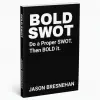
26 August 2026
I've launched by third book today - BOLD SWOT. It's available in print and Kindle on Amazon.…

01 July 2026
Evahan worked alongside AJL's senior management team and quality team throughout their ISO 9001 recertification process

19 June 2026
Seventh Ribbon Music is an independent music label producing original songs shaped by faith, identity truth, and…
