Prev post
The Bresnehan Family Office has provided seed funding to Seventh Ribbon Music
Seventh Ribbon Music is an independent music label producing original songs shaped by faith, identity truth, and movement

Context
Evahan recently supported an Australian lighting infrastructure company in undertaking on‑site due diligence of its existing offshore manufacturing supplier in Vietnam.
The engagement followed the identification of recurring quality issues across delivered product, including:
These issues were not isolated. They were systemic.
The challenge was not simply to identify non‑conformances.
The challenge was to understand how quality was actually being created — or compromised — inside the supplier’s manufacturing environment, and to establish a pathway to improve it.
Evahan Insight
Desktop review and email‑based corrective actions were not going to resolve the issue.
The only viable approach was:
This required operating in an environment where:
Evahan leveraged prior experience in establishing manufacturing operations for Australian‑owned companies in Thailand to navigate this environment effectively.
What Evahan Did
Evahan worked directly with the client’s leadership team on‑site in Vietnam to:
Supplier Due Diligence
Process Mapping and Visibility
Continuous Improvement Program Development
Welding and Coating Control
Packaging and Logistics Correction
Strategic Supplier Positioning
Outcome
The engagement transitioned the supplier relationship from:
to:
This delivered:
Importantly, it established a practical pathway to lift quality performance over time, rather than attempting to enforce compliance through documentation alone.
Evahan Position
Complex supply chain issues are not resolved through remote management or document exchange.
They are resolved on the floor.
Effective due diligence requires:
Evahan’s approach combines:
to turn supplier relationships into controlled, repeatable manufacturing outcomes.

Jason Bresnehan is the founder of Evahan Group and a commercial strategist. For over three decades, he has helped businesses cut through complexity, negotiate with confidence, and embed clarity into their operations.
His career includes six years with Delta Hydraulics in Tasmania and Thailand, where he oversaw the manufacture of hydraulic cylinders, hose assemblies, and manifolds for multinational clients such as Caterpillar. Working within Just‑In‑Time (JIT) supply frameworks, Jason gained firsthand experience in global manufacturing discipline, supply chain precision, and the commercial realities of delivering to world‑class standards.
Today, his work spans high‑risk, high‑stakes industries — from defence OEM, infrastructure, modular construction to marine engineering and transport.
Whether reviewing contracts, restructuring governance, or guiding acquisitions, Jason’s hallmark is turning ambiguity into clear, enforceable rules of engagement.
Alongside his consulting practice, Jason also manages Bresnehan Family Office assets, ensuring investments are aligned with long‑term legacy and commercial clarity.
Jason’s core principles are:
Cut to clarity, articulate with precision, KISS and act.
26 August 2026
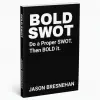
I've launched by third book today - BOLD SWOT. It's available in print and Kindle on Amazon.…

01 July 2026
Evahan worked alongside AJL's senior management team and quality team throughout their ISO 9001 recertification process

19 June 2026
Seventh Ribbon Music is an independent music label producing original songs shaped by faith, identity truth, and…